The moment the room went still
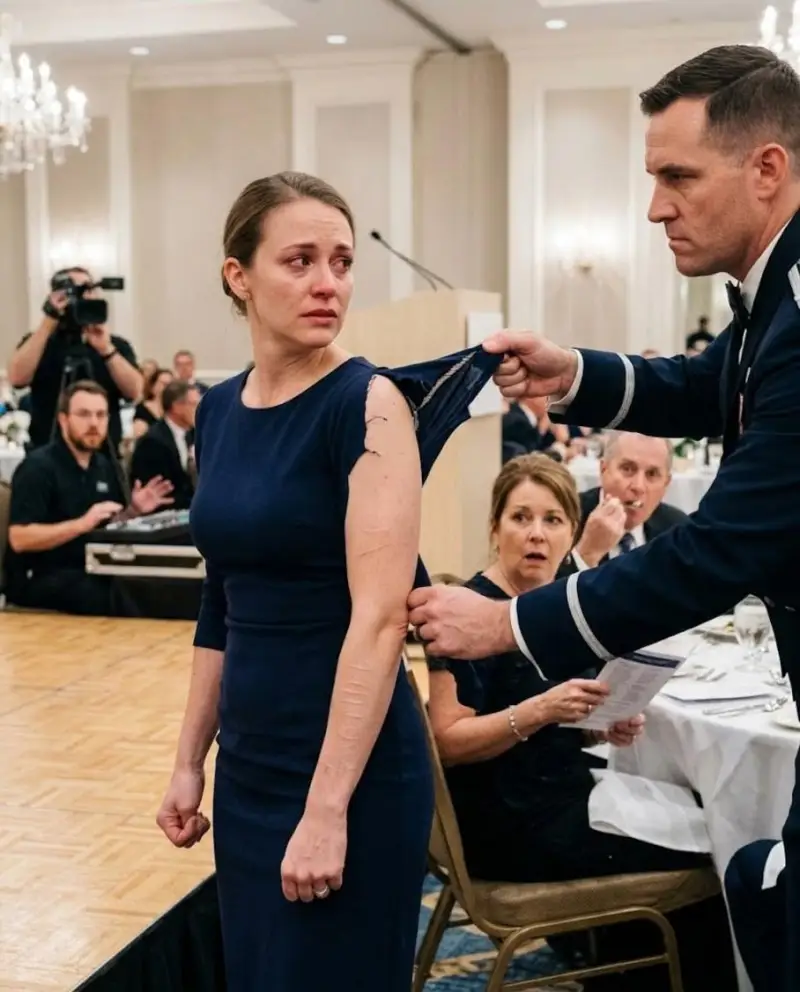
The stage lights were so bright they dried my mouth at once. My husband still had a fistful of my sleeve, and the torn fabric brushed the skin above my elbow as he held me in place for everyone to see. Around us, the ballroom fell into a silence so complete I could hear him breathing into his lapel microphone.
For months, he had prepared this room to believe his version of me. Every bruise became a story. Every long sleeve became “proof” that I was hiding something. If I missed an event because my arm swelled overnight, he would smile politely and tell people I was “having another episode.” He said it with such careful sympathy that others thanked him for being patient with me.
That was his method. He did not need everyone to hate me. He only needed them to pity him first.
The lie he built at home
To the charity, he was the respected organizer who remembered donor names and visited injured service members without a camera in sight. At home, kindness was measured by whether anyone could witness it. When guests were present, he would place coffee beside me like a devoted husband. Once the door closed, his grip became hard enough to leave me shaken and silent.
I thought silence might keep the damage contained. Instead, it gave him space to rewrite everything.
“Silence does not protect you from cruelty. It often gives cruelty the quiet it needs to sound believable.”
Three weeks before the fundraiser, a wounded soldier came to our house to repair part of the security system. My husband trusted him because he was dependable, skilled, and still recovering himself. He spoke to the soldier about loyalty the way some men speak about duty: as if obedience mattered more than understanding.
That attitude would later come back to haunt him.
The evidence he thought was gone
One evening, our kitchen camera captured the truth. It showed my husband blocking the doorway while I tried to leave. It showed his hand on my arm and my shoulder bumping the cabinet behind me. It showed that I was trying to pull away, not inventing drama, not performing for attention, not harming myself as he later claimed.
The next morning, he ordered the file erased from the local system before the fundraiser team collected footage for the opening montage. The wounded soldier deleted the visible copy, but he kept the original.
Meanwhile, my husband’s control tightened. He checked my phone, opened my mail, and questioned why I had spoken to the county hospital intake desk without him. He found the note in my coat pocket and laughed when he saw I had written that I did not feel safe at home.
- He called my concerns “drama.”
- He called my fear “instability.”
- He called my silence “proof” that I had something to hide.
The truth on the screen
At the fundraiser, he chose my dress himself and told me it made me look “steady.” Backstage, he leaned close and warned me not to embarrass him. Then, onstage, he spoke about invisible wounds and family struggles, sounding compassionate for the first minute. After that, he turned toward me and dragged me under the spotlight.
He accused me of harming myself whenever he was away. He said it with the calm confidence of a man sure no one would challenge him. Then he pulled my sleeve hard enough to tear the seam and expose my scars to the room.
I was shaking, but I did not cover my arm.
Instead, I looked past him and asked the technician to replay the opening video.
My husband smiled, thinking fear had confused me. Then the screen shifted to our kitchen. The timestamp appeared. His hand closed around my arm. My shoulder struck the cabinet. The room saw what he had tried to bury.
When the clip ended, a wounded soldier in the front row stood up and said, “Colonel, I kept the original.” He lifted a flash drive and explained that the complete file included the audio and the deletion record from the administrator account.
My husband turned pale as the truth finally caught up with him.
Summary: In the end, the lie he staged for the audience collapsed under the weight of real evidence, and the silence he counted on became the very thing that exposed him.