A Quiet Visit That Changed Everything
The first time I noticed the red ink on my nephew’s hand, every instinct I had told me something was wrong. I had spent years training myself to notice danger quickly, to read a room, to spot the smallest sign that someone was in trouble. But nothing prepared me for what I saw that afternoon at Meadowbrook Elementary.
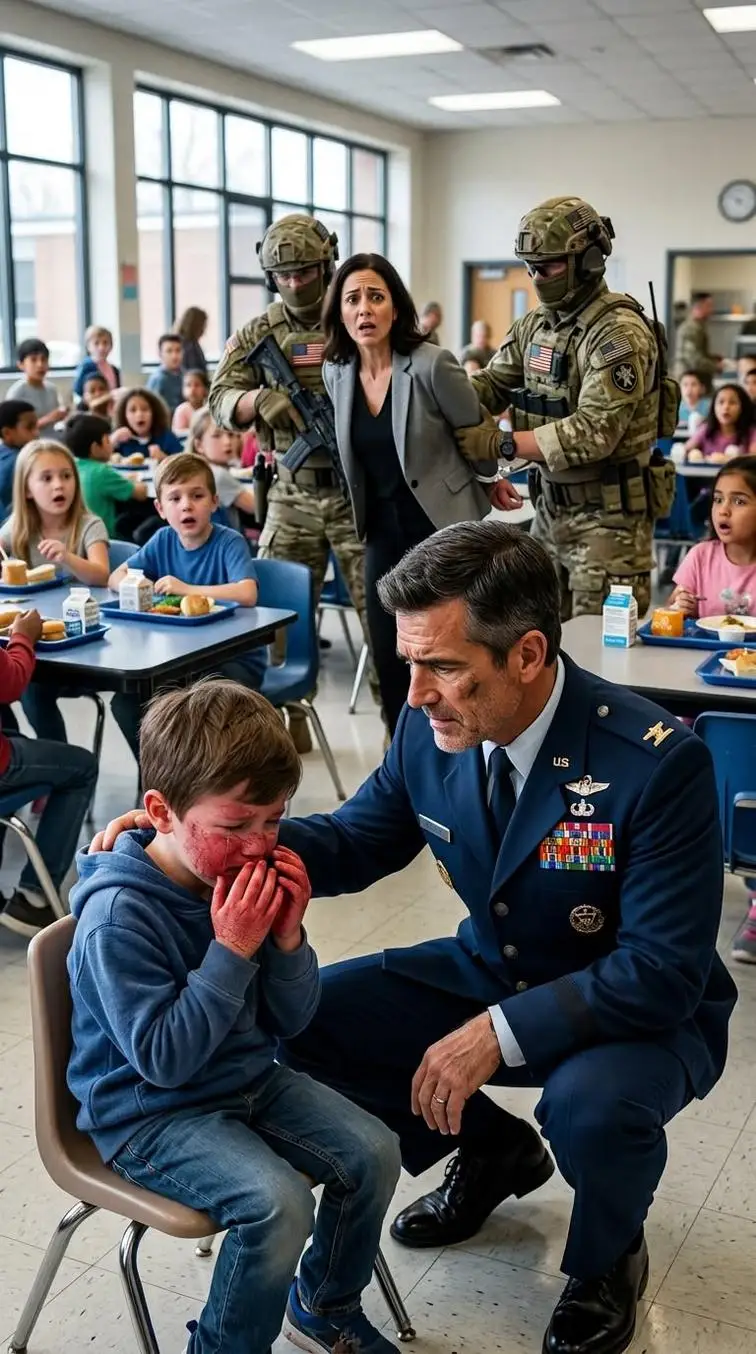
The cafeteria was loud and restless, filled with the everyday chaos of children at lunch. Trays scraped across counters, sneakers squeaked against the floor, and voices rose in a constant hum. Above it all hung a cheerful banner that seemed almost cruel in its brightness: EVERY STUDENT MATTERS.
I had come without warning. My nephew, Mason, had told me the night before that lunch had been “different” lately. He said it so softly, with the same careful tone a child uses when he is trying not to worry the adults around him. That was enough for me to drive over the next day and see for myself.
What I found tightened my chest.
Mason was not sitting with the other children in the middle of the room. He had been placed at the far edge, almost hidden in the shadows, with his shoulders drawn inward as if he wanted to take up as little space as possible. His tray held only a few plain items, while nearby tables were filled with warm meals and easy laughter.
Then I noticed something else: several other children were sitting in different corners of the cafeteria with the same stripped-down trays. Many of them kept their hands tucked low, as though they were trying not to let anyone see them.
“Uncle Colt?” Mason whispered when he saw me.
I knelt beside him and kept my voice calm. “Hey, buddy. Can I sit with you for a minute?”
He nodded, but before he could say anything else, I saw the stamp on the back of his hand. Two thick red words, pressed so firmly into the skin that they were impossible to miss:
MEAL BALANCE
It took me a moment to understand what I was looking at. The words had smudged slightly, but the message was clear enough. Instead of handling the situation quietly and respectfully, someone had marked children in a way that made them visible to everyone around them.
I looked at Mason’s tray, then at his face. He seemed tired, embarrassed, and far too used to being ashamed of something that was never his fault.
“What is this on your hand?” I asked gently.
Mason tried to hide it by pulling down his sleeve. “It’s nothing.”
But it was not nothing. It was a message. And it told me that something far more upsetting had been going on behind the scenes.
- My nephew’s lunch had already been paid for.
- Yet he was still being treated as if he had done something wrong.
- And he was not the only child wearing that mark.
As I sat beside him, the truth began to unfold in pieces. This was not just about lunch. It was about humiliation, confusion, and a system that had failed to protect children from being singled out.
I stayed calm for Mason’s sake, but inside I was deeply unsettled. No child should have to carry shame on their hand just to eat at school. No family should have to discover that dignity was being taken from children in such a public way.
Summary: I went to school expecting a simple answer about lunch, but what I found was a painful reminder that small actions can leave a lasting mark. Mason’s red stamp revealed a much bigger problem than I ever imagined.