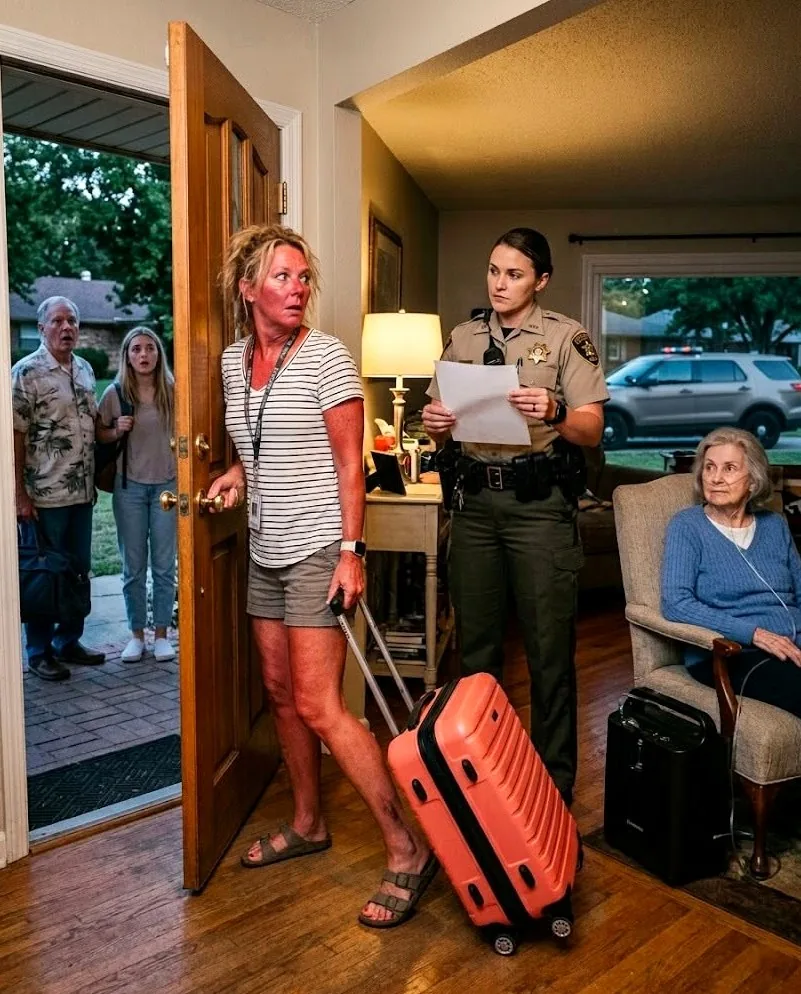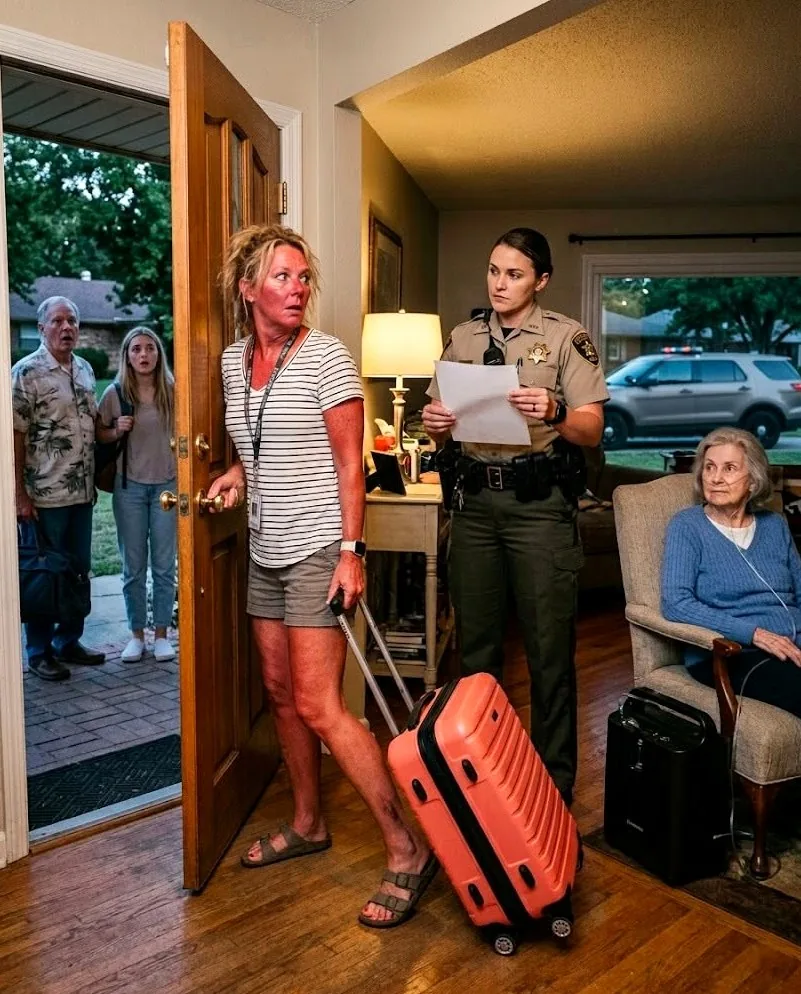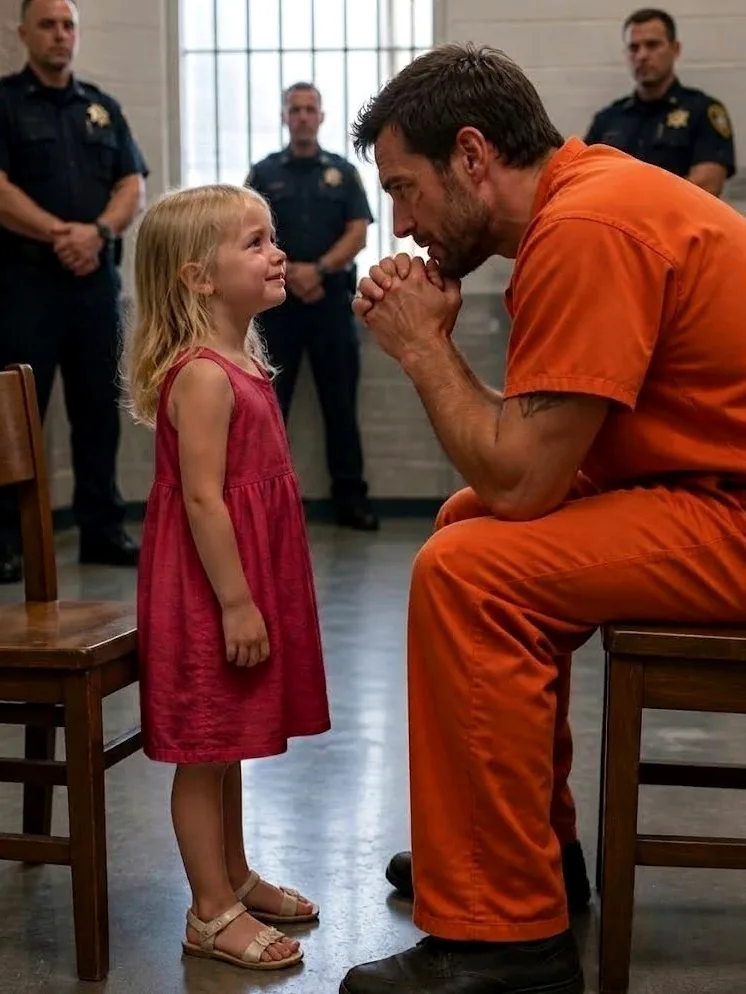
Minutes before Gavin Cole was meant to be strapped to the execution table, a child’s whisper changed everything. What began as a final goodbye became the moment a locked case cracked open, forcing the state to confront a truth it had buried for years.
The morning of the final visit
At 6:00 a.m., the prison gates opened on a day scheduled to end one man’s life. Gavin had spent five years inside the Huntsville Unit, sealed away in a concrete cell while appeals collapsed one after another and the world slowly moved on. By then, all he had left was a final meal form, a date on the calendar, and the stubborn insistence that he had never killed his wife.
He had repeated the same words so often that they seemed carved into the walls around him. “I didn’t kill her,” he would tell anyone who passed his cell. Guards heard it. Warden Robert Mitchell heard it. Even the people who had long stopped believing in Gavin still knew that sentence by heart.
The evidence against him had once looked overwhelming: his fingerprints on the weapon, blood on his clothing, a neighbor who claimed he saw him leave the house, and a prosecutor who painted him as a jealous husband. A jury decided his fate in less than four hours. Yet there was something in Gavin’s face that never fit the story everyone else had agreed to tell.
He looked less like a monster than a man who had been handed someone else’s ending.
The request that changed the routine
On the morning of his execution, Gavin asked for the one thing he still had the right to ask for.
He wanted to see his daughter.
“Just once,” he said, his voice raw with exhaustion. “Please let me see Chloe before it’s over.”
Death row was built on rules, not tenderness. The guards initially hesitated, and the request could easily have been dismissed as another impossible plea from a condemned man. But it reached Mitchell, a veteran warden who had overseen enough executions to know that final hours usually followed a grim pattern.
Some prisoners prayed. Some cursed. Some confessed. Gavin did none of those things. He simply kept saying he was innocent.
After a long pause, Mitchell made the order that would alter the entire day.
“Bring the child.”
Chloe walks into the prison
Three hours later, a white state vehicle rolled into the prison lot. A social worker stepped out beside an eight-year-old girl with blonde hair, pale cheeks, and solemn blue eyes. Chloe Cole did not cry as she entered the prison corridor. She did not struggle or ask questions. She walked so quietly that the noise around her seemed to recede.
By then, the prison staff had already heard that a final visit was happening. The atmosphere shifted in subtle ways: shoulders straightened, voices lowered, and even the usual cold efficiency of the facility seemed to pause. No one liked watching a child walk toward a goodbye the state had already decided was final.
Inside the visitation room, Gavin was strapped to the table. His orange jumpsuit hung loosely on his frame, and the metal cuffs pulled his wrists down, making him look even thinner than before. When he saw Chloe, he could only stare for a moment, as if his mind needed time to accept that she was really there.
Then tears came to his eyes.
“My baby girl,” he whispered.
Chloe stepped closer but did not run into his arms. The chains made that impossible. Instead, she placed both hands on the table and looked at him with an expression far older than her years.
“I know you didn’t hurt Mommy.”
The room fell silent. A guard near the door stopped moving. The social worker froze. Behind the glass, Mitchell lifted his head.
Gavin’s face changed instantly, as if something inside him had broken open all at once.
“Chloe…” he whispered.
The words no one expected to hear
Chloe glanced over her shoulder, then leaned in closer. Her voice dropped to a tremble, but what she said next made the guards later disagree about the exact moment the room began to fall apart.
Some remembered the second Gavin stopped speaking. Others remembered the social worker’s folder slipping from her hands. Mitchell later said the turning point came when Chloe whispered six words no child should ever have had to carry.
“Daddy, Mommy is still alive.”
Gavin stared at her, unable to move. “What?” he managed.
Chloe’s voice shook, but she continued. She said she had seen her mother at Grandma’s house the previous month. She said her mother had been wearing dark glasses. And she said Grandma had warned her not to tell anyone, because if she spoke, they would make sure Gavin died angry.
The words hit the room like a shockwave. The chains around Gavin’s wrists rattled as his body began to shake. For five years, he had lived under a sentence built on the belief that his wife was dead. Now his daughter was telling him she had seen the woman he was condemned for killing.
A photograph from the pocket
Warden Mitchell entered the room and asked Chloe who had told her to stay silent. The girl looked from him to her father, then reached into the pocket of her small blue coat.
She pulled out a folded photograph and slid it across the table.
It was blurry, apparently taken through a bedroom window, but the woman in the image was unmistakable: long blonde hair, a scar near her chin, and the same face Gavin had been convicted of murdering five years earlier. His wife. Chloe’s mother.
Mitchell did not hesitate.
“Stop the execution clock,” he ordered.
For a moment, the room seemed to stop breathing with him. Then the guards moved. The social worker reached for the child. Gavin lowered his head, overwhelmed by the impossible reality unfolding in front of him.
What followed after the room went silent
By sunset, the governor’s office had been notified. By midnight, emergency lawyers were preparing motions no one had expected to file. Before sunrise, the State of Texas was forced to halt the execution and begin looking again at a case that had once seemed closed forever.
The emotional weight of the moment was impossible to miss. A child had entered a prison to say goodbye to her father, only to bring proof that the woman he was condemned for killing was still alive. The case that had looked airtight was suddenly full of cracks.
That did not erase the years Gavin had already spent behind bars. It did not undo the pain of a child growing up with fear and silence hanging over her life. But it did something perhaps even more important in that first hour: it forced powerful people to stop and look again.
Mitchell, who had seen more final hours than most people ever could, understood that he had witnessed something rare. Not a confession. Not a last request. Not an execution carried out with grim certainty. Instead, he had watched a child carry the truth into a room built to silence it.
The state had been ready to kill a man whose story was supposed to be finished. Instead, one whispered sentence reopened everything.
Conclusion
The story of Gavin Cole did not end on the execution table. It turned on a child’s courage, a hidden photograph, and a truth that refused to stay buried any longer.
What happened in that visitation room forced everyone involved to face the possibility that an innocent man had nearly been executed to protect a lie. And because Chloe found the strength to speak, the search for the full truth could finally begin.