The dinner was supposed to honor my father’s retirement, but from the moment my eight-year-old son was handed a dry hotdog on a paper plate, I knew the night was about to expose more than anyone expected. What my brother thought was a harmless joke was really the last act in a long pattern of entitlement, and he had no idea I was ready to end it in public.
The Night the Family Dinner Turned Ugly
My brother Eric had chosen the restaurant, reserved the private dining room, and invited twenty-two relatives as if he were hosting a grand celebration. The place was polished and quiet, with white tablecloths, low lighting, and the kind of server attention that made everything feel formal and expensive.
Eric was especially proud of himself because he had convinced everyone not to worry about the bill. He kept repeating that the “family account” would take care of it, as though he were doing us all a favor rather than spending money that didn’t belong to him. He even planned to present Dad with a twelve-thousand-dollar vintage Rolex as a retirement gift.
That family account was something else entirely. It had started as an emergency medical fund years earlier, after my mother’s surgery. I had been the one adding money to it month after month. Eric never contributed. Dad never did either. Yet somehow, whenever the family wanted comfort, luxury, or a showy gesture, my savings became everyone’s shared resource.
The Hotdog That Said Everything
My son Noah had been excited all day. He wore a blue button-down because Grandpa liked “nice shirts,” and he had made a handmade card that said, Happy Retirement, Grandpa. I’m proud of you. He came to dinner expecting a special evening, not a lesson in where he stood in the family hierarchy.
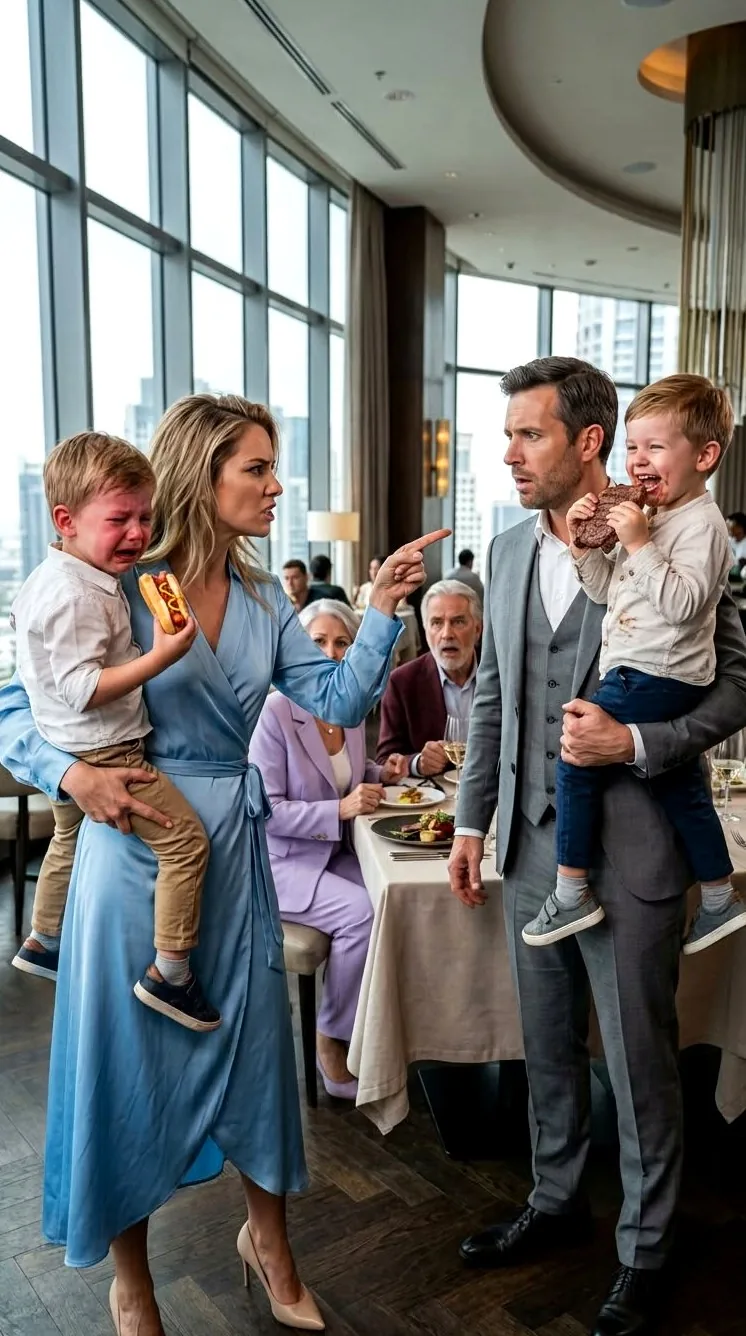
Then Eric came over with a dry hotdog on a paper plate, as if he were delivering scraps from another event. He set it in front of Noah and said, “There. We didn’t order for your son.”
My mother didn’t even flinch. “You should’ve packed him something,” she said, like my child being overlooked was my mistake.
Noah looked from the hotdog to the steaks being cut by his cousins and then up at me. My nieces and nephews had beautiful plates in front of them: hot food, expensive sides, and portions that made it clear no one had forgotten them. Noah was trying to shrink himself in his chair before anyone else could make him feel smaller.
He wasn’t just being fed differently. He was being told, in front of everyone, that he mattered less.
Eric laughed when he saw the expression on my face. “Kids eat hotdogs,” he said. “He’ll survive.”
His wife laughed too. My father looked down at the wine list, suddenly fascinated by anything except what was happening at the table. The rest of the family stayed quiet, which in some ways was worse than arguing. Silence can be its own kind of approval.
The Pattern Behind the Smiling Faces
I didn’t cry. That surprised some people at the table, including Eric, who probably expected embarrassment to do his work for him. He had always depended on me being the reasonable one, the one who swallowed hurt so the room could stay comfortable.
But that night, I remembered every time my money had been treated like family property. I remembered the subtle pressure to cover costs, the assumptions, the gratitude that never quite reached me because people felt entitled instead of appreciative. Eric loved to play the golden child in public, especially when someone else was paying for the spotlight.
And Noah, who had done nothing except show up in his best shirt and his best manners, was being used to prove a point. That was the part I couldn’t ignore. It wasn’t about hotdogs versus steaks. It was about dignity, about who in this family was considered worth noticing.
My son leaned closer and whispered, “Mom, I’m not that hungry.”
That hurt more than Eric’s comment. He was hungry. He had simply learned, in a single humiliating moment, that asking for more was dangerous.
When I Finally Stood Up
The waiter arrived with the portable card machine to close out the massive bill, and the table seemed to hold its breath. Eric was still sitting back in his chair, wearing that smug little smile, probably imagining how generous he looked as Dad prepared to receive his expensive watch.
Instead, I stood up and lifted my glass.
“Before dessert comes out,” I said, “I’d like to make an announcement.”
The room turned toward me. Eric’s grin widened, expecting a toast in his honor, maybe even a thank-you for everything he had supposedly arranged.
“Please separate the checks,” I told the waiter. “Everything ordered for my son and me goes on my personal tab.”
The waiter nodded immediately.
Eric blinked, confused that the moment wasn’t unfolding the way he wanted. “What are you doing?” he asked, his voice sharpening.
I didn’t answer him right away. Instead, I reached into my purse and pulled out my phone, then opened my banking app so everyone could see exactly what I was doing. I also took out the one piece of paper I had brought with me for this very reason.
It wasn’t anger that steadied me. It was clarity. For years, I had watched people spend what they didn’t earn, claim what they didn’t build, and lecture me about generosity while relying on my restraint.
The Announcement That Changed the Room
I set the paper on the table and spoke calmly enough that every word landed. I reminded them that the so-called family account was not a blank check for luxury dinners, expensive watches, or anyone’s performance of importance. It was an emergency fund, one I had maintained for years and one that had been treated as communal only when it was convenient.
Then I made my real point clear: Noah would never again be placed at a table where adults decided his value by the size of his meal. If people wanted to celebrate Dad, they were welcome to do that honestly. If they wanted to pretend my savings were everyone’s shared inheritance, that ended tonight.
The change in the room was immediate. Eric’s wife looked stunned. My mother’s face tightened with the kind of shock that comes when someone finally says the quiet part out loud. My father sat frozen, the retirement dinner suddenly looking less like a celebration and more like a reckoning.
“When people are cruel in public, they are usually counting on you being too embarrassed to expose the bill.”
That was the truth I had lived with for years. And once I said it plainly, the whole illusion started to fall apart.
Eric tried to argue, but the energy in the room had already shifted. People who had been willing to ignore the hotdog were no longer comfortable pretending this was normal. The waiter stood by patiently, waiting for the final decision. The Rolex box remained on the table, suddenly less like a gift and more like evidence of how far the entitlement had gone.
Conclusion
In the end, that dinner was remembered for the moment the family stopped pretending generosity and respect were the same thing. My brother had wanted a display of wealth and obedience. Instead, he got a public boundary, and my son got something more important than a fancy meal: he saw someone stand up for him.
I did not make a scene because I wanted revenge. I spoke up because dignity should never depend on who is willing to be humiliated quietly. That night, the hotdog on the paper plate stopped being a small insult and became the final proof that some family traditions deserve to end.