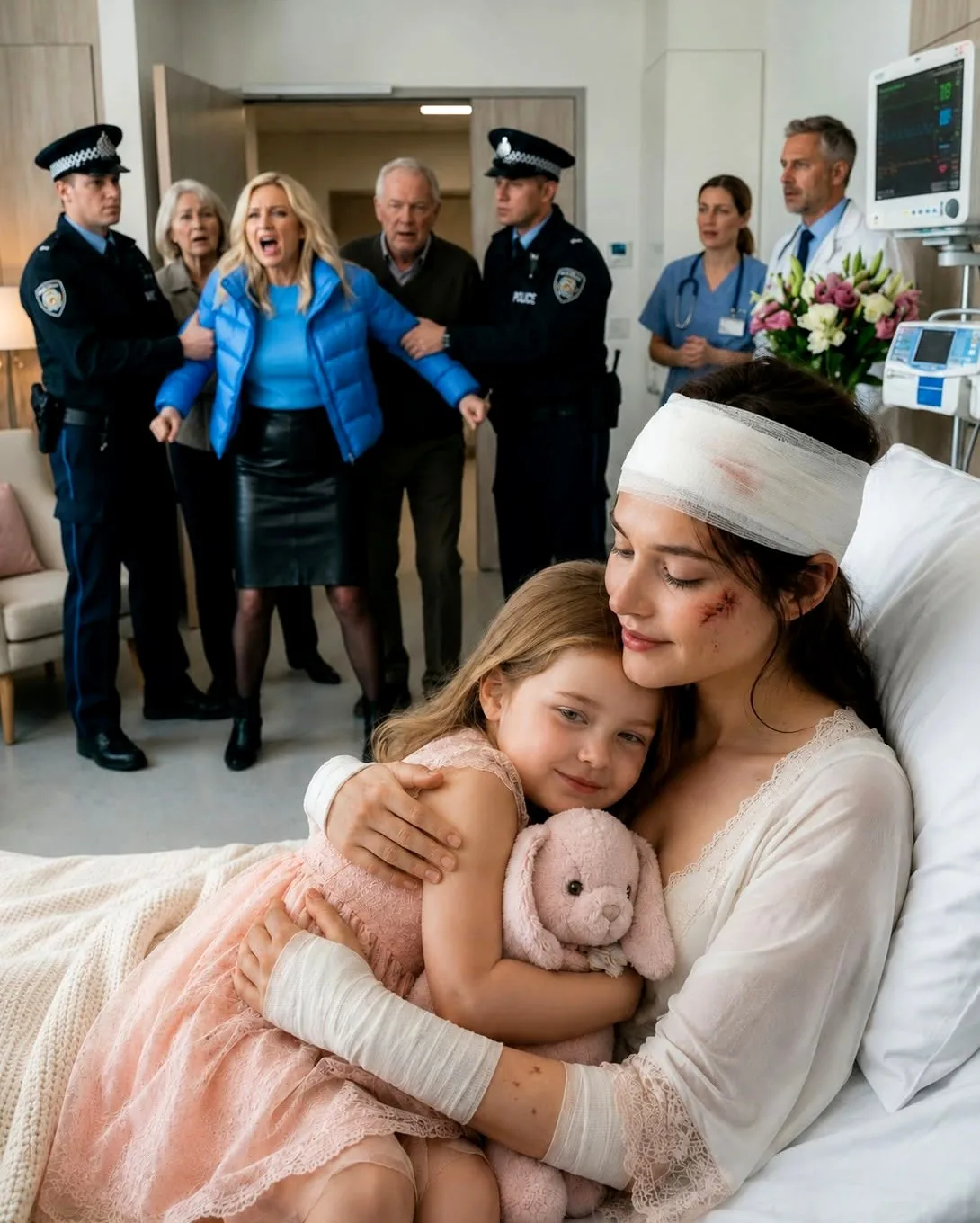
The first thing I asked after waking in a recovery room at St. Mary’s Hospital in Portland was simple: “Where’s Lily?” I was weak, stitched up, and barely able to keep my eyes open, but nothing mattered more than my six-year-old adopted daughter. By sunrise, that question would lead to the end of my family’s control over our lives.
A Child Who Finally Felt Safe
Lily had come into our home after years of moving from one foster placement to another. She was tiny for her age, careful with every word, and so accustomed to being overlooked that she apologized before asking for water. We had adopted her two years earlier, and for the first nine months she never called me Mom.
Then one night she whispered, “Mommy,” and immediately burst into tears, terrified she had done something wrong. I held her for a long time and promised her something I meant with every part of me: she would never have to earn the right to belong.
That promise mattered even more because my own parents never understood why we adopted her. In public, they smiled, posed for pictures, and acted proud of our “family.” In private, they were colder. My mother called Lily “that poor child,” my father dismissed her as “your charity project,” and my sister Madison once asked whether Daniel and I still planned to have “real children.”
After that, I stopped leaving Lily alone with them whenever I could help it. I trusted my instincts more than their polite faces. Even then, I never imagined they would use my hospitalization to turn my daughter’s world upside down.
When Illness Put Everything in Their Hands
My appendix ruptured suddenly, and the infection that followed sent the whole situation into chaos. I remember emergency surgery, the glare of operating-room lights, and the long fog afterward as doctors and nurses moved quickly around me. Daniel never left my side. He stayed through the sleepless nights, the pain, the worry, and the helplessness that comes with not being able to fix anything immediately.
My parents offered to keep Lily “for a few days” while I recovered. I was too sick to argue, and because I needed to believe they could be decent for once, I agreed. That was a mistake I would not make twice.
When I woke in the recovery room, I reached for my phone before I reached for water. I called my parents’ house. No answer. I called again. Still nothing. Then I called Madison.
“She’s overreacting,” Madison said, as if my daughter’s fear were some minor inconvenience.
Her irritated sigh came through the phone before her words did. I asked to speak to Lily, and then I heard a tiny sob in the background. It was so faint at first that I almost missed it, but once I heard it, everything in me went still.
“Madison,” I said, my voice suddenly and unnaturally calm. “Put my daughter on the phone.”
Instead of handing over the phone, Madison snapped that Lily was overreacting and that this was what happened when “damaged children” were brought into a normal family. The room seemed to tilt. Pain shot through my abdomen, but the real blow came a second later when I heard my mother’s voice in the background, telling Madison to hang up.
What They Said to My Daughter
Then Lily came on the line, crying so hard she could barely breathe. Her voice was small and desperate, and the words she managed to get out broke something in me.
“Mommy! I’m sorry! I’ll sleep in the garage! Please don’t send me back!”
I had spent years helping that child learn that love was not something she had to bargain for, and in one instant my own family had dragged her straight back into fear. I could no longer hear the beeping of the monitors or feel the tension of the stitches in my body. All I could hear was my daughter begging not to lose the only home she had ever trusted.
Madison returned to the line, cold and dismissive. She said Lily needed to learn her place. She said Mom and Dad weren’t getting any younger. Then she said the sentence I will never forget:
“She has to make room for the real children.”
When she laughed afterward and called it “the truth,” I understood that this was not a misunderstanding or a careless remark. It was cruelty, plain and simple. My daughter had been treated like a temporary inconvenience in her own home.
The Call That Changed Everything
Daniel reached for the phone, but I quietly pulled it away. I did not scream. I did not beg. I did not waste one more second trying to appeal to people who had shown exactly who they were when they thought I was too weak to stop them.
Instead, I gave one instruction: put my daughter in the guest room and do not let anyone speak to her again. Then I ended the call and immediately phoned our attorney.
That single decision began the reversal of everything my family believed they could control. By the time sunrise came, Lily was safely back at our home under police escort. My parents no longer had keys. Access to every shared account we had ever allowed was gone. Madison’s name disappeared from emergency contacts, authorization forms, and every family document connected to my daughter.
By breakfast, my entire family understood they had pushed too far. The consequences were no longer theoretical. They were immediate, permanent, and completely outside their control.
Why Their Power Ended That Morning
What happened in that hospital room was never just about one cruel conversation. It was about a long pattern of contempt dressed up as concern. My parents had smiled for the camera while making Lily feel small. Madison had tested the edges of what she thought she could get away with. All of them believed my illness made me vulnerable enough to accept whatever they decided for my child.
They were wrong. Illness may have put me in a bed, but it did not erase my role as Lily’s mother. If anything, hearing her cry made my priorities clearer than ever. Family is not defined by blood alone; it is defined by protection, loyalty, and the willingness to stand between a child and harm.
There is a particular kind of silence that follows betrayal. It is the silence after the phone goes dead, after the truth lands, after the person on the other end realizes their power is gone. That was the silence I chose. And in that silence, I made a future for my daughter that did not include people who saw her as disposable.
Conclusion
When I left that hospital bed, I did so with a clearer understanding of my life than I had ever had before. Some relationships can survive hard conversations. Others cannot survive the moment they reveal their true shape. My parents and sister chose cruelty, and they lost access to the little girl they had tried to terrify.
Lily came home that morning to the only place she should have ever been made to feel safe. And from that day on, our home belonged to the people who loved her, not the people who thought they could decide who counted as real. That was the end of their control, and the beginning of her peace.